The challengeDevelop a site-specific installation capable of creating a dialogue between Ancient Egypt and contemporary visual culture. Commissioned by the Museo Egizio and CAMERA – Centro Italiano per la Fotografia, the project sought to encourage visitors to experience the museum differently, questioning the role of photography, memory and observation in an age dominated by smartphones.
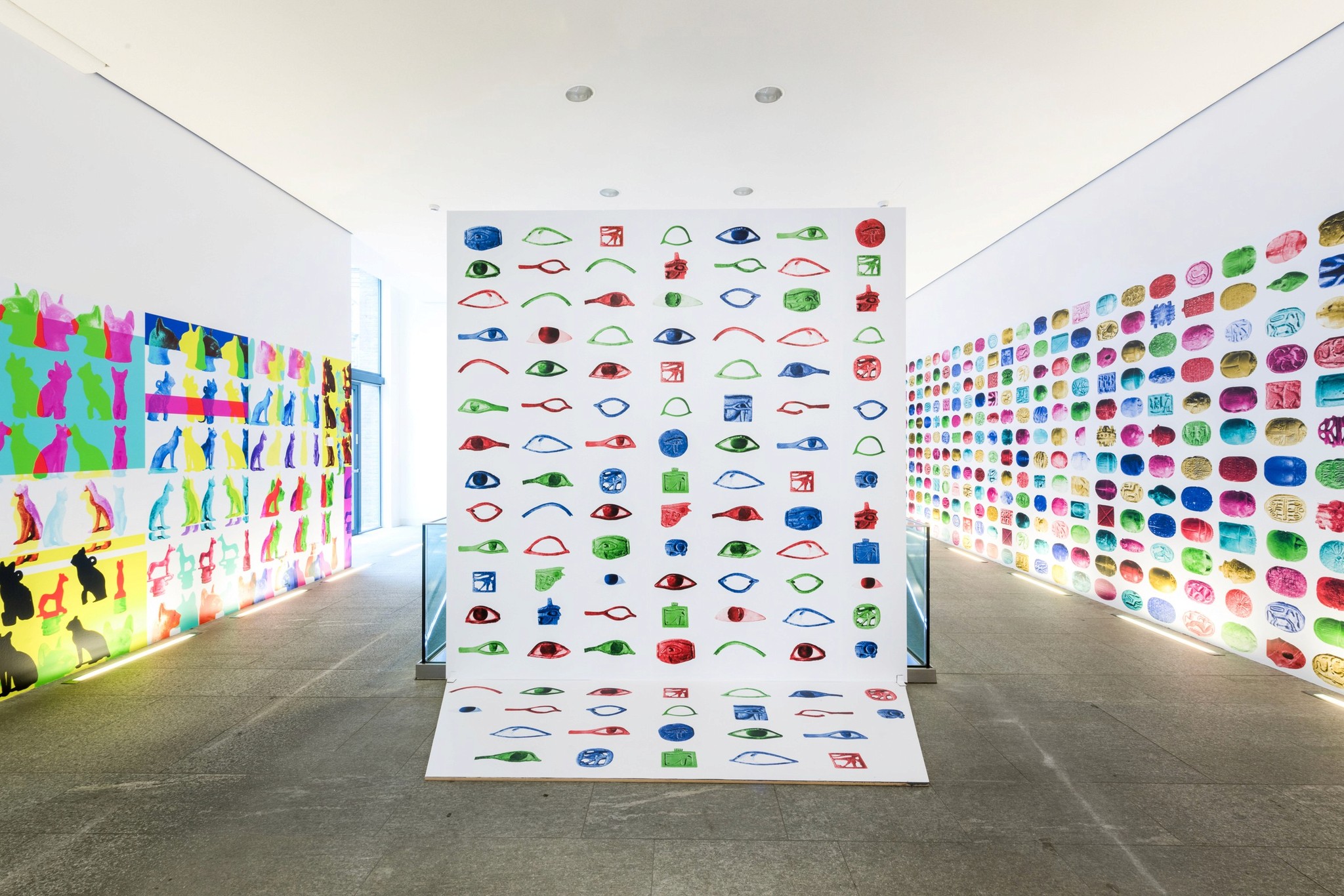
The ideaOver the course of a year, Sharon Ritossa reinterpreted the museum's collection by revealing unexpected connections between ancient artefacts and contemporary life. Rather than simply documenting the objects, the project explored photography as an archaeological gesture: many works were reconstructed from thousands of smartphone images, assembled into visual mosaics that echoed the meticulous process through which archaeologists reconstruct fragmented artefacts. Each photograph became both a portrait of the past and a reflection on how we build memory in the digital age.
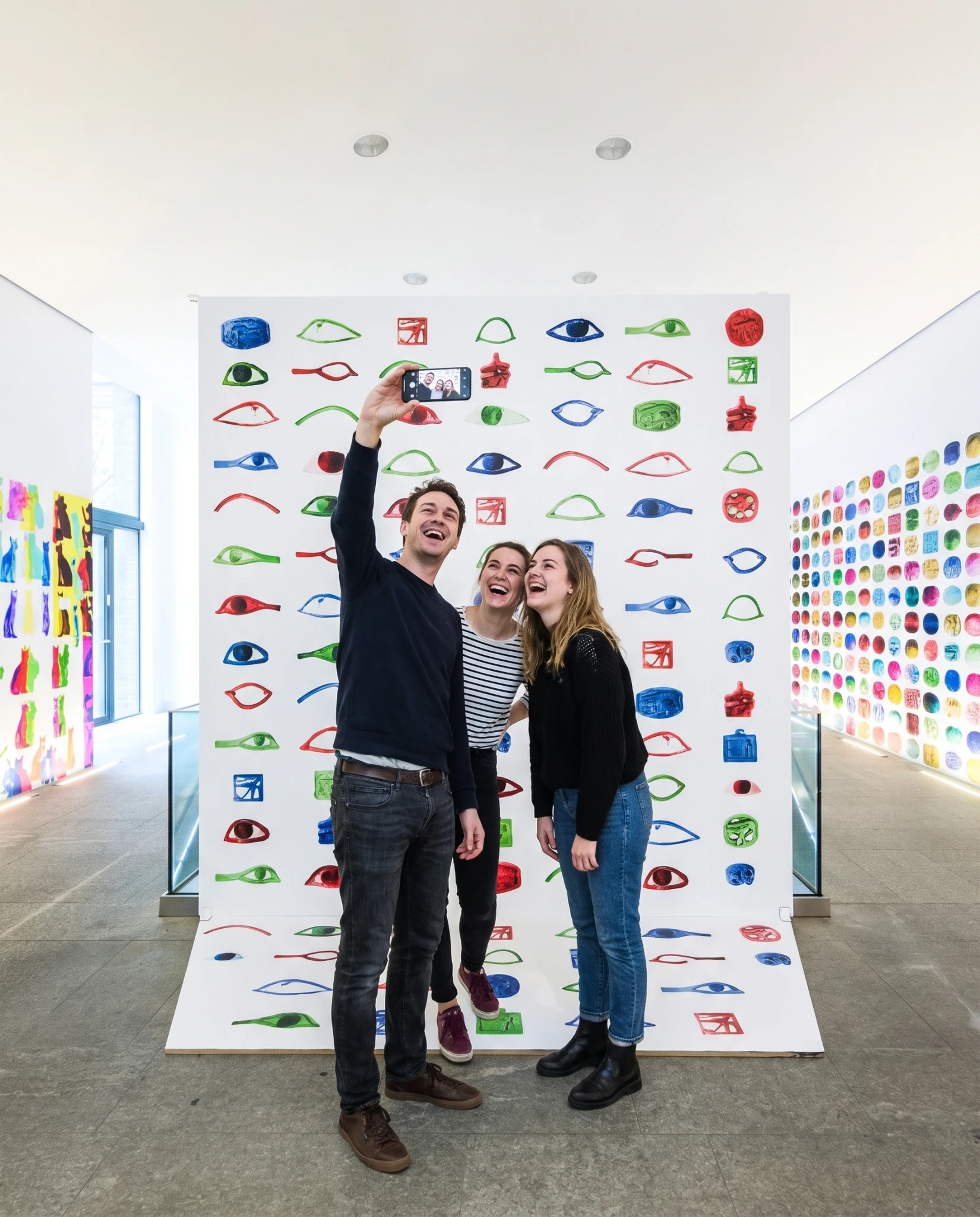
The experienceSharon Ritossa conceived and developed Enjoy Eternity from research to final installation, transforming the entrance hall of the Museo Egizio into a large-scale photographic environment. Monumental images covered the museum's architecture, inviting visitors to become part of the work before entering the permanent collection. By turning the entrance into an interactive photographic space, the installation encouraged a more conscious relationship with image-making, suggesting that memory can be created through experience rather than endless documentation.
OutcomeOriginally conceived as a temporary installation, Enjoy Eternity remained on display for several years due to its extraordinary public reception. Millions of visitors experienced the installation, which became one of the museum's most photographed and widely shared spaces. The project successfully combined contemporary photography, public participation and cultural heritage, demonstrating how an artistic intervention can transform the way audiences engage with a museum.